
What Should a Daytime Skincare Routine Do, Really?
🕐 Read time: 3 min
This continues the conversation from What Does Supporting Your Skin Barrier Really Mean?
Most daytime routines are built around one idea: defence.
Protect your skin. Shield it. Block things out.
That sounds sensible. But it is also incomplete.
Your skin does not spend the day standing still behind a wall. It moves with you. It warms up. It cools down. It stretches, sweats, tightens, and adapts as your day unfolds.
So the better question is not, "How do I protect my skin all day?"
It is, "What does my skin need to handle the day well?"
What your skin faces during the day
Your day starts long before you think about skincare.
Light hits your face when you wake up. Indoor air dries it out while you get ready. Screens come into play before breakfast. Then there is movement between spaces, changing temperatures, stress, time pressure, and long hours of being "on".
None of this is extreme on its own.
But it is constant.
Your skin does not experience these things as separate events. It experiences them as one long stretch of exposure, from morning to late afternoon.
That is why daytime care is not about reacting to one problem. It is about supporting your skin through hours of small demands.
A good daytime routine supports, it does not overload
Many people treat their daytime routine like armour.
Layer after layer, just in case.
But heavy routines often do the opposite of what they promise. They sit on the skin. They interfere with comfort. They make skin feel tight, greasy, or tired by midday.
A supportive daytime routine feels different.
It allows your skin to breathe.
It keeps your skin comfortable as conditions change.
It helps your skin stay steady instead of constantly adjusting.
When your routine works, you are not thinking about your skin by lunchtime. That is the goal.
What should your skin be able to do by 3pm?
This is a useful checkpoint.
By mid-afternoon, your skin should still feel like itself. Not dry. Not shiny. Not irritated. Not heavy with product.
It should feel calm.
It should feel balanced.
It should feel able to continue.
That does not happen by accident. It happens when your routine respects how skin functions during the day rather than forcing it into defence mode.
Daytime care is about resilience, not resistance
Resistance tries to block everything out.
Resilience helps your skin cope with what comes its way.
During the day, your skin needs flexibility. It needs hydration that lasts without sitting on the surface. It needs support that moves with you, not against you.
This is why daytime care focuses on:
-
Comfort over correction
-
Balance over intensity
-
Support over stimulation
Your skin is already working hard. Your routine should make that work easier, not louder.
Why day and night routines are not the same
Day and night ask different things of your skin.
During the day, your skin manages exposure. It responds to light, air, movement, and activity. At night, it shifts into a different mode entirely.
That is why a routine that feels perfect in the morning can feel wrong before bed. And it is why daytime care should never try to do the job of night care.
They are partners, not duplicates.
After the day has happened to you
The real test of a daytime routine is not only how your skin feels when you apply it. It is how your skin feels after the day has happened to you.
The commute. The screens. The meetings. The changing temperatures. The city air. The long hours.
A thoughtful daytime skincare routine should feel good from the moment you apply it, while helping your skin stay comfortable, balanced and supported through the hours that follow.
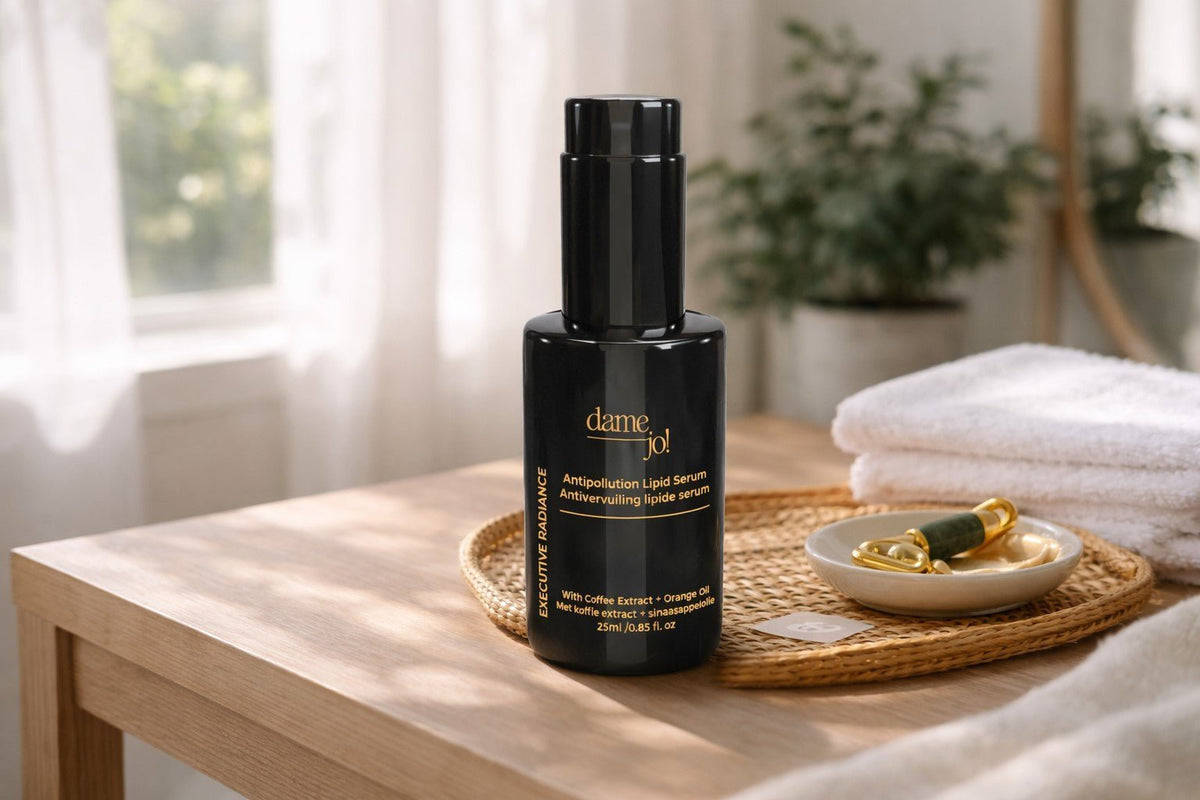
That thinking is also behind our Executive Radiance Coffee Lipid Serum, created as the daytime half of the Executive Radiance 24-Hour Lipid System to support skin through the demands of the day.
Because good daytime care is not only about shielding your skin from life. It is about helping your skin move through life well.
Frequently Asked Questions
What's the real difference between a day routine and a night routine?
By day, your skin is handling the world around it. At night, it's repairing itself. Two different jobs, two different routines.
How many products do I actually need for a daytime routine?
Fewer than you think. A good routine keeps things simple so your skin can do its job.
Why does my skin feel tight or greasy by midday?
Usually your routine is fighting against your skin instead of working with it.
Does my daytime routine need to block everything to work?
No. Your skin doesn't need a wall around it. It needs help coping with the day, not hiding from it.
How do I know if my daytime routine is actually working?
You forget about your skin by lunchtime. That's genuinely the best sign.